)
)
)

Collaboration, education and representation shaping the future of paramedicine
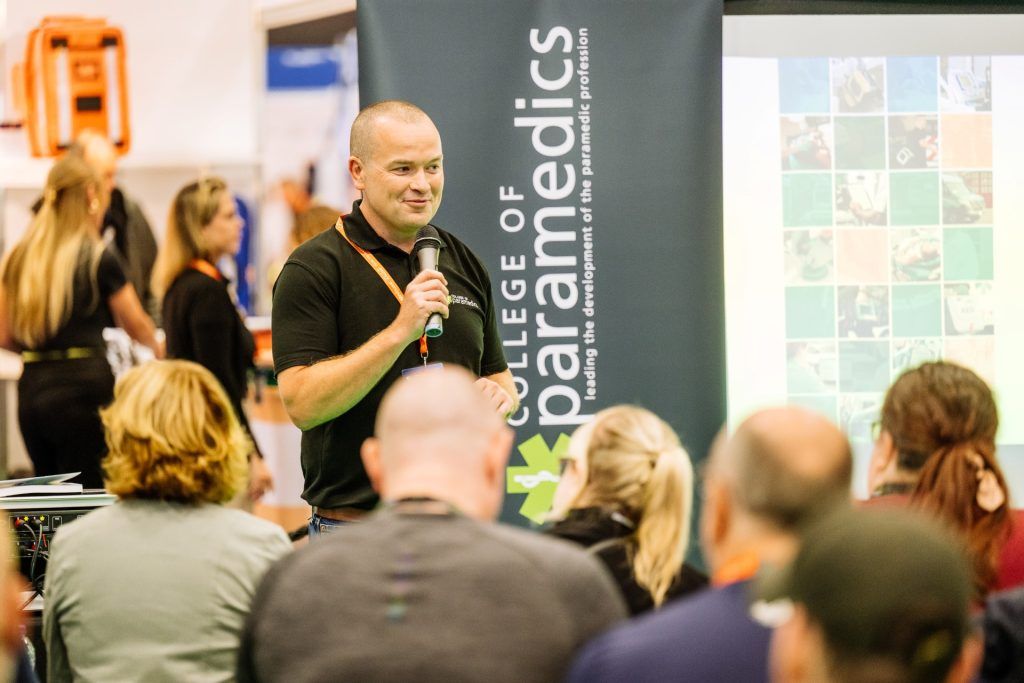
Collaboration, education, and representation are central to modern paramedicine. At the College of Paramedics, these principles guide everything from professional development to cultural change, with CPD Advisor Steve Poulton helping to put them into practice.
After an earlier career in television and filmmaking, Steve retrained as a paramedic in 2015, qualifying in 2017. He went on to work on the frontline throughout the pandemic, attending some of the UK’s first COVID-19 patients.
His involvement with the College began during the pandemic, when continuing professional development (CPD) activity had all but stopped. “When the world stopped, paramedics carried on,” he said.
“CPD stopped too, and I knew the College had a stage, so I started creating webinars. That quickly grew, and I became more involved in events before joining as CPD Advisor two or three years ago.”
Learning shaped by frontline experienceSteve’s role is intentionally varied, combining his work within an ambulance service with his responsibilities for developing CPD content and programmes.
“I still work frontline, so I talk to paramedics every day,” he explained. “That helps me understand where the gaps are in knowledge, skills or confidence, and create CPD around that.”
For Steve, the College’s role is about giving paramedics a clear voice and stronger professional identity. “Historically, we were seen as an extension of A&E,” he said. “But in the last 20–25 years we’ve grown a lot. The College gives us that voice and that platform to showcase what we do and push the profession forward.”
He pointed to independent prescribing, university partnerships and the development of newly qualified support programmes as major milestones, but said the next big step will be the College’s bid for Royal Charter status.
Since this interview, the College of Paramedics announced that it will officially become the Royal College of Paramedics from January 2026, following constitutional changes and a full rebrand. You can read more on this here.
Strengthening connection through CPDThe College has maintained a strong presence at The Emergency Services Show, particularly through its CPD Theatre programme.
“One of the great things about The Emergency Services Show is connecting with members,” Steve said. Each year’s programme is shaped by feedback from members and the changing needs of the profession. “Paramedicine evolves so quickly that feedback from two years ago is already out of date,” he said. “I look at what’s current, what’s next and what members are asking for, and design the programme around that.”
The Emergency Services Show, he added, strengthens collaboration across emergency services. “It brings the tri-services together, ambulance, police and fire, and shows that we are one emergency family.”
Challenging culture and supporting membersOne of the College’s most recent initiatives is the ‘It’s Not OK’ campaign, launched at this year’s Show.
“The campaign challenges poor behaviour at every level,” Steve explained. “It’s about calling out things that get dismissed as ‘banter’ and creating a culture where people feel protected and supported. The College is there to listen and, if needed, challenge trusts on members’ behalf.”
Research, representation and the road aheadResearch and evidence-based practice remain central to the College’s work. “Everything we do is based on evidence,” Steve said. “New research is constantly challenging assumptions, for example, in areas like analgesia and trauma care, and that’s what keeps us moving forward.”
As the profession diversifies, the College continues to form new groups to represent emerging areas of practice, from primary care to critical care.
“As the profession grows, the College grows with it,” he said. “Without students wanting to become paramedics, the role would disappear – so we’ve got to support them from that first ambition stage right through to the most specialist areas.”
A year of celebrationLooking ahead, 2026 will mark a year of celebration for the College, with its National Conference taking place in May.
“It’s going to be about celebrating our workforce and the partnerships that support them,” Steve said. “We’ll have doctors and nurses joining us to talk about the work they do alongside paramedics, because that joint model is what paramedics are great at.”
For Steve, the future is about continuing to evolve while staying grounded in representation and learning.
“My ambition for the College is to keep being that voice – to never become stagnant, always push for development and not be afraid to challenge,” he said. “It’s an exciting time for the profession, and I’m proud to be part of it.”