)
)
)

Hands-free, connected technology could transform firefighter PPE
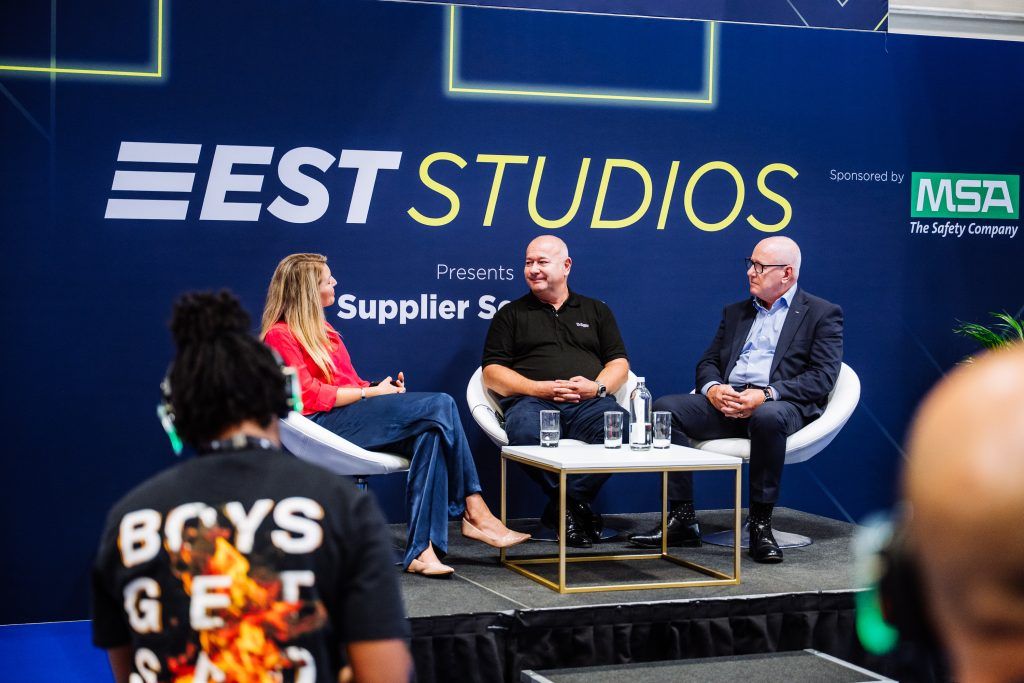
Gary Walsh has dedicated over 30 years to the fire service, progressing from firefighter to national leadership roles. Today, he brings that frontline insight to Dräger, focusing on how connected, hands-free equipment can reduce fatigue, enhance situational awareness, and ultimately improve crew safety.
At The Emergency Services Show, Gary joined Dräger account manager Kevin Barton to explore how innovation is reshaping firefighting, from clearer communications to lighter kit, and the cultural hurdles that stand in the way of adoption.
“Ownership of breathing apparatus has always been very important to me. From firefighter through to Chief Fire Officer, I saw how critical it is. When I had the chance to lead on respiratory protective equipment nationally, my focus was always on the wearer and how the BA set supports both individual firefighters and the incident commander.” - Gary Walsh.
His years reviewing reports on firefighter injuries and fatalities reinforced that focus. “It was about influencing suppliers to listen to that learning,” he said. “That’s why I was keen to get involved with Dräger at this stage in my career.”
For Gary, the biggest change ahead is digital connectivity. “The National Fire Chiefs Council talk about digital and data, and how they can improve the operational field,” he said. “Connected firefighter technology builds situational awareness, not just for the firefighter in the smoke, but for the entry control officer monitoring them, and the incident commander making decisions.”
That connectivity underpins Dräger’s latest products. Rather than separate tools, they are being developed as part of an ecosystem designed to make the job easier and safer:
- FireGround – a next-generation telemetry app that provides live monitoring of BA wearers, allows digital notes, and can transfer data to the cloud for post-incident review.
- UCF FireCore – an award-winning hands-free thermal imaging camera mounted in the helmet, with an in-mask display so firefighters can scan an area while keeping both hands on the branch.
- FPS-COM Voice – a mask-mounted comms system launched just weeks before the show, designed to make radio communication clearer and easier to understand in noisy, high-stress conditions.
“All of them – FireCore, integrated comms, the in-mask display – they’re hands free,” Gary said. “That means firefighters can focus on the task in front of them while staying connected. It’s about creating an ecosystem that supports faster, safer decisions.”
Clearer communication is a particular priority. “Fireground comms have been criticised heavily in the past,” Kevin acknowledged. “This new system makes speech clarity much better, both sending and receiving, whether it’s between wearers or back to entry control.”
Alongside situational awareness, the design of equipment can also support wellbeing. Dräger’s AirBoss Connect system has reduced weight through design, making BA sets more comfortable across a range of body types. “It’s not just about the kit working, it’s about reducing fatigue and stress,” Kevin said. “That’s part of keeping people safe on long and demanding incidents.”
Future innovation is already being tested with UK services. Two areas in particular stand out:
- Firefighter location tracking, to help incident commanders pinpoint crews inside buildings. “There have been tragic incidents where finding firefighters quickly was difficult,” Gary noted. “This technology could be a step change.”
- Physiological strain monitoring, including core temperature and heart rate data. “It’s about gathering the right information, in a way that works with the kit, and then transferring that to the people who need it,” he said.
Despite the pace of innovation, Gary warned that adoption can lag behind. “The tally system we use on the fireground was introduced after the Smithfield fire in the 1960s, so it’s 70 years old,” he said. “There’s a cultural connection to it, and suppliers have to respect that, but also show how digital systems can be just as robust.”
For him, the challenge is about trust and collaboration. “Suppliers like Dräger need to understand where services want to go, and work with them nationally so the kit matches operational guidance, funding realities and service priorities,” he said.
For Kevin, The Emergency Services Show is the best place to start conversations. “We’ve got our full portfolio on show,” he said. “It’s a chance for services to see the technology, talk about where they are and where they want to be, and get hands-on with the kit.”