)
)

Medavie bridges global paramedic shortages through collaboration and education
Paramedic shortages continue to challenge emergency healthcare, both in Canada and beyond. For Medavie, the nation’s largest emergency medical services provider, the answer lies in innovation, integration, and collaboration – approaches that strike a chord with emergency services audiences in the UK and internationally.
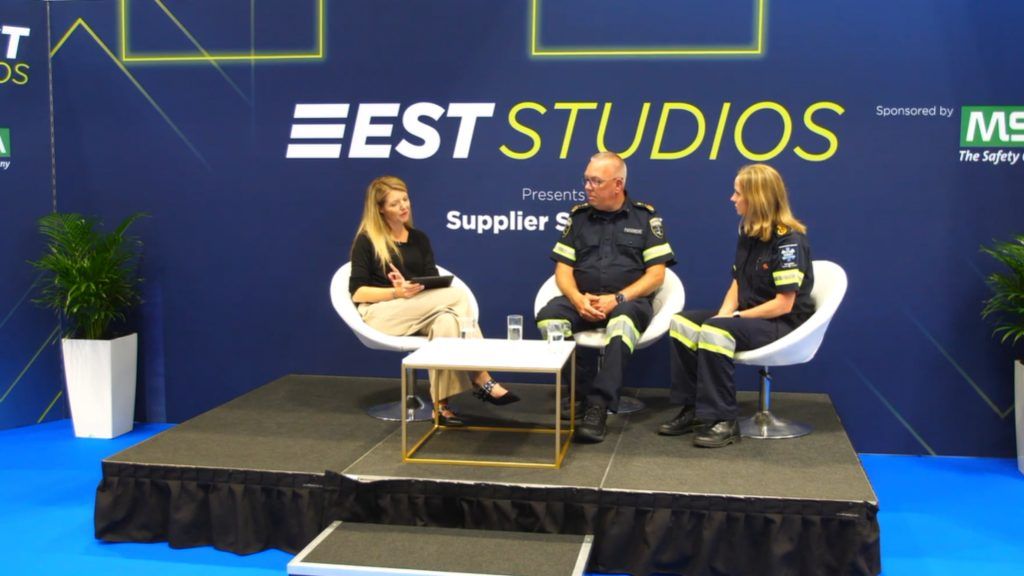
Speaking at The Emergency Services Show, Carla Roy, Manager of Professional Development and Quality Assurance, and Brad Reid, General Manager of Medavie HealthEd, shared how the organisation is using creative approaches to attract and train new paramedics, including through an international recruitment and education initiative.
“Medavie is a Canadian-wide company. We have over 8,000 employees across the country, and we’re the largest provider of emergency medical services in Canada,” said Brad. “One of the innovative things we’ve done is recently travelled to Australia for some international recruitment and provided some educational training. Having the educational institution of HealthEd within Medavie’s companies, we were able to offer training for Australian paramedics to come and work in Canada.”
The programme was developed to help address workforce gaps across health disciplines. “It is a fact that we have a huge shortage, not only in paramedicine but in all health disciplines,” said Carla. “So we work really hard to look at how we get people into that profession, or how we assist them in working in our industry.”
Having both an operational service and an educational arm under one organisation made the model possible. “We were able to take training from the classroom into operations, strengthening both sides of the organisation,” Brad explained. “It was a unique opportunity to look at different parts of the world and bring those professionals to Canada to help address shortages.”
For an audience of UK emergency services professionals, the model offered clear parallels with ongoing efforts to tackle workforce pressures through integrated training and recruitment pathways.
Canada’s paramedic profession is evolving toward a more evidence-based and career-focused approach, which made Australia’s model a strong fit. “Canada’s transitioning, and as we’re transitioning into more of an evidence-based and career-based type of profession, the Australian model really met that,” said Brad. “When we looked at the training that the Australian paramedics had versus what we were delivering, there were very small differences. So it was very easy for us to build that gap training that coincided with operations.”
Carla explained that the gap training programme combines classroom learning with high-fidelity simulation and practical skills development, typically lasting four to six weeks. Each cohort’s training is adjusted to reflect participants’ previous experience, ensuring the process remains flexible and responsive to individual needs.
Each recruit is paired with a licensed Canadian paramedic for around three months of mentorship. “That provided support, guidance, and built their confidence,” she said. “Some people required a little bit of extra help, some maybe not as much, and we were able to be really flexible with that.”
The collaboration has brought mutual benefits. “The Canadian-trained paramedic, for the most part, is very technically trained, very focused on advanced care, airway support, critical thinking,” said Carla. “The Australian model is a Bachelor of Paramedicine: they spend more time academically on understanding disease processes, pathophysiology, evidence-based medicine and research. Pairing them together has created a strong, well-balanced team and delivered excellent patient care.”
Brad said collaboration with regulators has been crucial to ensuring consistency across provinces. The Canadian Organisation of Paramedic Regulators sets the national standard and oversees the examination process, helping confirm that both new graduates and internationally trained practitioners meet the same professional requirements.
Partnerships, he added, have been vital to success. “If the regulators aren’t on board, it won’t be successful, so their communication and relationships are very important as well.”
Both speakers emphasised flexibility, adaptability and listening as key takeaways. “There were a lot of things that we didn’t know,” said Carla. “It gets easier each time we have a new cohort because we’ve passed that hurdle with one group and can move to the next.”
“It’s about communication and adaptability,” Brad agreed. “Being willing to be wrong and change as needed.”
Watch the full interview here.