)
)
)

Why visibility and mentorship matter for the next generation of police leaders
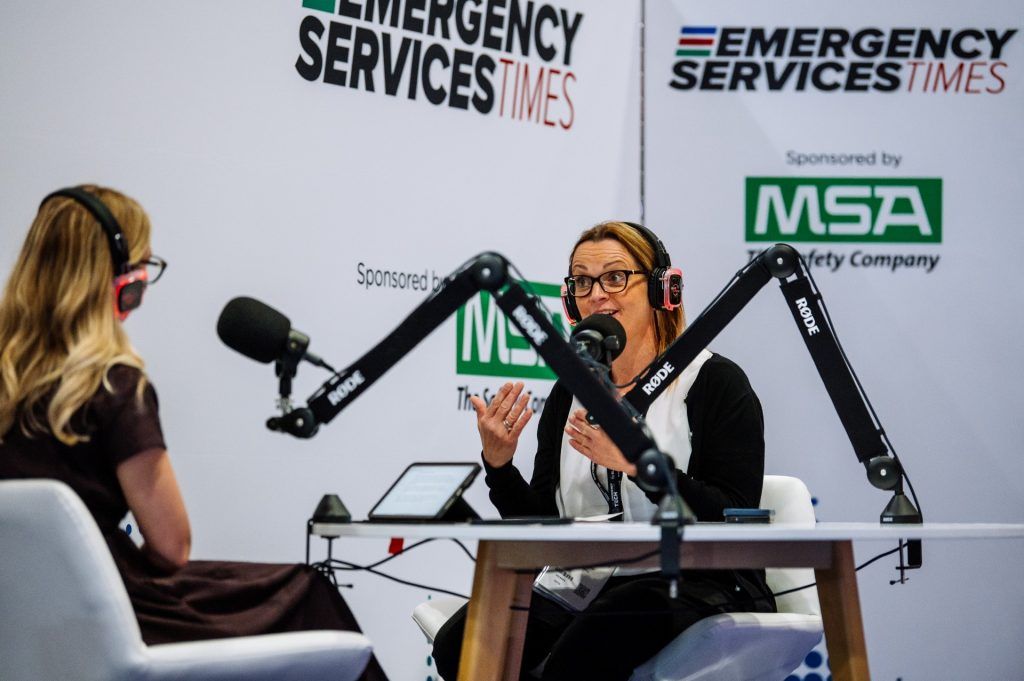
Detective Superintendent Frankie Westoby has spent nearly 30 years in policing. Beginning as a volunteer Special Constable and now a senior leadership trainer at the College of Policing, her career reflects resilience, visibility, and the impact of embracing opportunity.
As part of Emergency Services Times’ #SheServesToo campaign, Frankie’s story provides a candid look at leadership, balancing family with frontline duties, and paving the way for the next generation of women in policing.
A career built on saying yes
Frankie’s policing journey began at university when she signed up as a Special Constable with Greater Manchester Police. The experience cemented her ambition, and by 1997 she had joined the Metropolitan Police.
Her early years in the Met were varied: safeguarding investigations, public order operations and anything else that came her way. “Whenever I got an opportunity, I would always say yes,” she recalls.
Just six years into her career, Frankie was promoted to Detective Sergeant, while pregnant with her first child. “It was probably the best role I’ve done in policing,” she says, a moment that shaped her confidence in her ability to lead while raising a family.
Leadership under pressureFrankie’s willingness to step forward saw her take on roles she never imagined at the start of her career. She worked for a Metropolitan Police commander with the national mental health portfolio, finding herself at the heart of Home Office discussions. Later, she joined the National Police Coordination Centre, helping to coordinate national responses during the Manchester Arena bombing and the London terror attacks.
“These were experiences I never thought I would have,” she reflects. “But each one opened new opportunities, and I just took them.”
Today, those moments inform her teaching. “I love developing other people. Seeing people succeed matters more to me than where I am on the promotion pathway. My job now suits what I love most.”
Balancing career and motherhoodFor much of her career, Frankie has balanced senior policing roles with raising two boys as a single mother. “I’ve always been full time, which has had its challenges,” she says. “Sometimes I had to take roles that weren’t my passion but worked for home life. Other times, I paused my progression because my children needed me more.”
It’s a reality familiar to many women in the service. “There’s still mum guilt, there’s still judgement. People don’t mean to, but they ask, ‘Are you going to be okay doing that role when you’ve got children at home?’ We still have a way to go.”
For Frankie, the solution is clear, she said policing needs flexible, inclusive career pathways that recognise people’s life stages. “Sometimes you need to press pause without being penalised. We don’t always recognise that.”
Shifts for women in policingWhen Frankie first put on a uniform in 1997, women were few and far between in firearms or public order teams. Today, things look very different. “Over 35% of officers are now female, and we see women in roles that just weren’t open to us before,” she says.
Progress has been made, but she is candid about the gaps. “We still need to support women of colour in particular. Visibility matters – if you can’t see it, you can’t be it. I was fortunate to have Christine Jones, a Met commander, as a mentor early in my career. She showed me what I could achieve. Everyone deserves to have someone like that to look up to.”
The leaders policing needs in 2025At the College of Policing, Frankie leads a course designed to support underrepresented leaders. She is passionate about changing what leadership in policing looks like.
“If we’re going to change policing, we have to break the echo chambers. Senior leaders used to surround themselves with people who thought the same way. Now, we’re seeing more cognitive diversity – people who think differently, and that’s how real change happens.”
She also highlights generational differences as a strength. “We’ve got four generations in policing now. Gen Z think differently from Gen X. How I did it isn’t necessarily the right way. Good leaders need to listen, acknowledge that, and bring those perspectives in.”
And underpinning it all, she says, is empathy. “Compassion and kindness are not weaknesses. True leaders hold on to them, even when they have to deliver tough messages. It shows you’re human.”
The power of mentorshipMentorship, Frankie says, has been critical in her journey. “I’ve had mentors, men and women, who challenged me, believed in me and helped me through difficult times. I’ve always made sure I pay that forward.”
She currently mentors officers from across the country, often online. “One woman I’ve been supporting has just been promoted. Mentorship is about creating safe spaces and also about speaking up for people in rooms they can’t be in. Without it, opportunities get lost.”
While much of her focus is on police officers, Frankie is equally passionate about the progression of police staff. “Policing can’t operate without police staff,” she says. “We need proper career pathways for them too. If we get that right, it will genuinely change policing.”
Words to women starting outFrankie knows instantly the advice she’d give to women entering policing today.
“You belong in every room. Seek out mentors, find allies. And when opportunities come along, even if you’re scared, say yes. Policing is such a varied career, you never know where it will take you. And always be your authentic self. If you try to be something you’re not, you won’t enjoy your career.”
This interview was conducted as part of Frankie’s role with the British Association for Women in Policing (BAWP). You can find out more about BAWP and its work here.