)
)
)

How Rolatube's Portable BRC Mast and Tripod Systems Enhanced Maritime & Coastguard Agency (MCGA) Coastal Operations
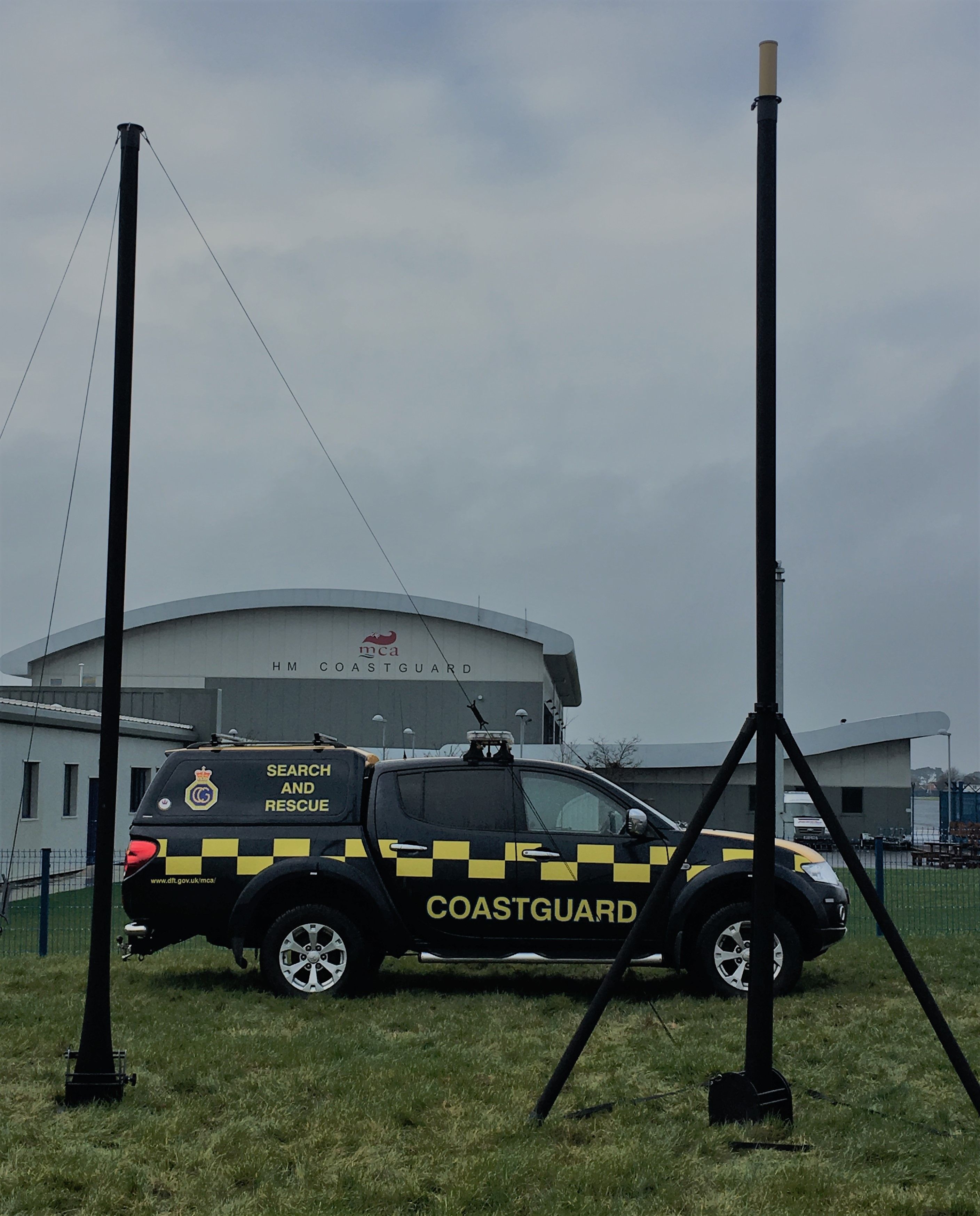
The MCGA’s work covers maritime safety and the prevention of
loss of life on the coast and at sea. Its teams operate across the UK
coastline, often along cliff paths, beaches and headlands where vehicles cannot
reach. The role spans front-line response, public-facing demonstrations and a
wide range of supporting activity, all of which benefit from equipment that is
light, compact and quick to deploy.
The Operational Context
Coastal work places real demands on portable equipment.
Teams move into difficult locations on foot, with everything they need carried
in by hand. Conditions are weather-driven and unpredictable, so the time spent
setting up or recovering equipment is time taken away from the response itself.
The MCGA also runs awareness and demonstration activities indoors and at
events, where the same kit has to perform reliably in a very different
environment.
These factors together call for a portable mast and tripod
configuration that can move easily, deploy quickly and adapt to whatever the
situation requires.
These factors together call for a portable mast and tripod
configuration that can move easily, deploy quickly and adapt to whatever the
situation requires.
The Rolatube Configuration
Working through a Rolatube distributor, the MCGA chose a
configuration built around four products:
System 75 5m mast
System 50 2m tripod
Mast Support Adapter
System 75 Rolacage
Together, these give MCGA teams several different deployment
options from a single kit, with no specialist equipment needed to switch
between them.
The System 75 5m mast can be deployed on its own where the
full 5m is required, or with the System 75 Rolacage when a lower height
suffices, as the Rolacage enables deployment to be stopped at any point to the
full height. The Rolacage provides a stable, ground-anchored base for the
rolled mast and supports controlled extension to height.
The System 50 2m tripod is equally versatile. It can be used
independently, or with the Mast Support Adapter fitted, the same tripod acts as
a support for the System 75 mast during deployment, which reduces the number of
personnel needed to raise it. In zero wind conditions, such as the indoor
demonstrations the MCGA runs to show its activities to the public, the tripod
can also support the deployed mast directly.
The result is a single, modular kit that covers everything from quick tripod setups in the field to a fully extended 5m mast at a demonstration event, without teams having to carry multiple separate systems.
Why the Flexibility Matters
For the MCGA, three benefits stand out.
1) Weight and pack size. Carrying lightweight kit into hard-to-reach coastal locations is essential for teams that have to move quickly across difficult terrain, and the Rolatube systems pack down to a small fraction of the size of comparable telescopic equipment.
2) Flexibility. With one configuration covering multiple deployment options, teams can adapt to whatever the situation needs, from a quick tripod setup to a fully extended mast.
3) Reliability. With no moving parts to seize or
fail, the equipment is ready to perform first time, even after long periods
between uses, which suits a service that has to respond to events at short
notice.
For an organisation working to prevent loss of life on the
coast and at sea, the value of a lightweight, man-portable mast and tripod kit
is straightforward. The MCGA’s chosen configuration of Rolatube BRC systems
gives teams the flexibility they need across operations, training and public
engagement, all from a kit that fits comfortably within the constraints of a
foot-portable deployment.
For more on how Rolatube’s BRC mast and tripod systems
support emergency services and field response work, visit us on Stand D17 and explore our
masts and tripods.