)
)
)

Portable Masts for Emergency Services: Mobile, Deployable Solutions for Rapid Response
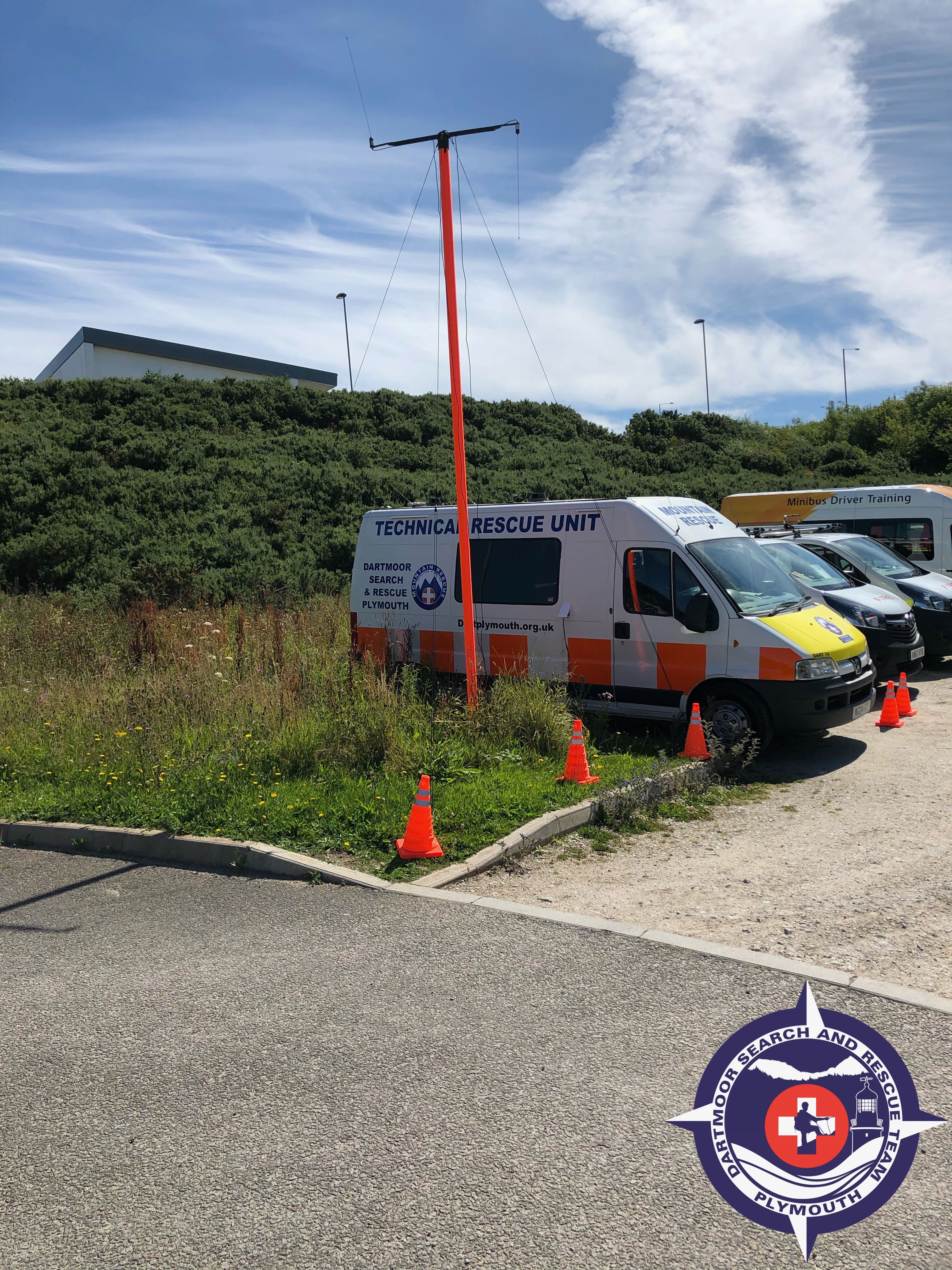
Whether the requirement is a mobile mast for an incident command vehicle, a temporary mast for a search-and-rescue site, or a rapid deployable mast for emergency communications, Rolatube systems are designed to perform when it matters most.
Why Choose Rolatube for Emergency Operations
Originally developed for defence applications where failure
is not an option, Rolatube systems bring mission-tested readiness to emergency
services. Compared with traditional masts, Rolatube’s unique and patented BRC
technology offers strong reliability in a compact, lightweight form, without
the bulk and slow setup that hold back conventional kit.
The same systems are already in use across combat zones,
humanitarian operations, search-and-rescue missions and first-responder fleets
worldwide. For emergency teams, that translates to a rugged portable mast you
can trust to work first time, even after long periods in storage.
Why Emergency Teams Need Portable, Deployable Masts
Emergency services operate in dynamic, high-stress
environments where traditional fixed infrastructure is often unavailable or
compromised. A portable mast gives teams the flexibility and reliability needed
to establish critical communications, lighting and monitoring capabilities
wherever they are needed most.
Fast-Changing Emergency Environments
Emergency situations evolve rapidly. Equipment has to be
deployed, repositioned and recovered quickly as the picture changes. A mobile
mast that can be raised in one location and moved to the next within minutes
makes a real difference when the operational requirement can shift with little
warning.
In emergency response, every minute counts. Traditional
heavy equipment requires extended setup times and multiple personnel, which
consumes resources that could be deployed elsewhere. Emergency teams need
solutions that can be operational within minutes, ideally with a single operator.
Emergency operations depend on reliable communications for
coordination, safety and effectiveness. When fixed infrastructure is damaged or
unavailable, a portable mast provides the elevated positioning that supports
radio antennas, repeaters, emergency broadcast equipment and inter-agency
communication systems. For teams setting up an emergency base station in the
field, a mobile mast system can be the difference between coordinated response
and silence.
Mobility and Transportation Constraints
Emergency response vehicles have limited space and weight
capacity. Equipment has to be compact enough to fit alongside other essential
gear while staying light enough not to affect vehicle performance or fuel
efficiency during long-distance deployments.
Core Use Cases in Emergency Services
Search and Rescue Operations
Search-and-rescue missions often take place in remote
locations with no existing infrastructure. Rolatube portable masts enable rapid
deployment of essential equipment, supporting rescue operations in challenging
terrain and time-critical situations. Common uses include emergency lighting
for night operations, communication antennas in remote locations, coordination
equipment for command and control, and signal beacons and navigation aids for
aircraft and ground teams. In a field rescue communication setup, the same
field-deployable mast can support a satellite or microwave link one minute and
a directional antenna the next.
Disaster Response
Natural disasters and major incidents often destroy or
compromise existing infrastructure. A temporary mast lets teams re-establish
critical capabilities in affected areas, supporting both immediate response and
longer-term recovery. Typical applications include replacement emergency
communications infrastructure, area lighting for relief operations and safety,
equipment support for coordination centres, and public-safety lighting and
temporary surveillance mast setups for security around relief sites.
Mobile Command and Communications
Emergency command centres need flexible communication
capabilities that can be established rapidly wherever they are needed. Rolatube
masts support mobile command operations by giving teams elevated positioning
for antennas, repeaters and other critical communication equipment. As a field
mast solution, the same setup can establish incident command communications,
support multi-agency coordination, enable long-range emergency communications
when cellular networks are compromised, and provide backup communication
systems during major incidents.
Emergency vehicles benefit from integrated mast systems that
can be deployed without separate transport. Vehicle-mounted Rolatube systems
let teams establish operational capabilities immediately on arrival at an
incident scene, whether that means rapid scene lighting, mobile communications
integrated into the vehicle, mobile command-post capability, or a
multi-function platform suitable for a rapid-deployment vehicle responding to
any emergency the call demands.
Key Advantages of Rolatube Emergency Mast Systems
Lightweight and Compact Design
Emergency response vehicles work with strict weight and
space limits. Rolatube’s BRC technology delivers the required capability while
keeping the impact on vehicle payload and storage space to a minimum.
Fast Deployment and Recovery
In emergency operations, rapid deployment can be critical.
Rolatube systems typically deploy in under five minutes with minimal personnel,
allowing emergency teams to establish operational capabilities quickly and
efficiently. A single trained operator can usually deploy and recover the kit,
with no tools required and an intuitive setup designed for use under pressure.
Emergency equipment has to be ready when needed, without
complex maintenance regimes. Rolatube’s BRC design has no moving parts to jam,
freeze or fail, which keeps reliability high in harsh emergency environments.
Rugged and Field-Proven Products
Emergency operations expose equipment to extreme conditions:
severe weather, temperature extremes and rough handling. Rolatube systems are
engineered to perform reliably across an operating temperature range of -31°C
to +49°C and, when deployed with guy ropes as standard, withstand winds up to
100km/h. Reliable operation in rain, snow and ice extends that performance into
the conditions emergency teams actually face.
Easy Transportation and Storage
Emergency services need equipment that fits seamlessly into
existing vehicle and storage systems. Rolatube’s compact design lets multiple
systems be stored efficiently without compromising access to other essential
kit.
Rolatube offers a range of portable mast systems for
emergency services applications, each designed to balance portability,
deployment speed and operational capability so teams can choose the right
system for the task.
Equip Your Response Teams
Strengthen your emergency response capabilities with
Rolatube’s portable mast solutions. Our military-proven BRC technology delivers
the rapid deployment, reliability and compactness emergency services need when lives
are on the line. Whether you are enhancing search-and-rescue capabilities,
improving disaster response infrastructure, or upgrading mobile command
systems, Rolatube provides portable masts to support your critical operations.
Meet our team on Stand D17 at the Emergency Services Show to discover more on our portable masts and tripods for the emergency services sector.
FAQs: Portable Masts for Emergency Services
What role do temporary masts play in emergency response?
Temporary masts provide critical infrastructure support
during emergencies by enabling rapid deployment of communications, lighting and
coordination equipment where fixed services are unavailable or damaged.
Can Rolatube systems be deployed by one person?
Yes. Most Rolatube systems can be deployed by a single
trained operator in under five minutes.
Are Rolatube masts suitable for vehicle integration?
Yes. Rolatube systems are designed for easy integration with
emergency vehicles. The compact packed size and mounting compatibility make
them well suited to vehicle-based deployment, including rapid-deployment
vehicles and mobile command platforms.
What height options are available?
Rolatube offers heights from 3.5m to 10m to suit different
emergency requirements, with options across the System 50, System 75, System
100 and Integrated Antenna Mast ranges.
Can they support antennas and lighting?
Yes. Rolatube masts support loads up to 23kg (System 75
Double Tube) depending on mast height, with universal mounting points
compatible with a range of emergency-service equipment.
How durable are they in harsh environments?
Rolatube masts are engineered for the extreme conditions
typical of emergency operations. They operate reliably from -31°C to +49°C and,
when deployed with guy ropes as standard, withstand winds up to 100km/h.
Can Rolatube masts be used in confined spaces?
Yes. The rollable deployment method needs minimal ground
clearance and works in confined spaces where traditional telescopic masts
struggle.
How light are Rolatube masts?
Rolatube masts are lightweight by design, ranging from 2.0kg
(System 50) to 22.7kg (System 100).
How much storage space do Rolatube masts require?
Rolatube masts pack down to compact sizes, with the System
50 requiring only 170mm x 250mm x 180mm of storage space.
What types of equipment are typically mounted on temporary masts?
Emergency services commonly mount radio antennas,
communication repeaters, LED lighting arrays, emergency beacons, weather
monitoring equipment and coordination devices on Rolatube masts.
Are portable systems used alongside fixed infrastructure?
Yes. Portable masts complement fixed infrastructure by
providing temporary expansion capability, backup systems during maintenance,
and rapid deployment options for emerging situations.
What training is required for emergency personnel to operate Rolatube masts?
Minimal training is required. The intuitive design means
most emergency personnel can be trained to deploy and recover Rolatube systems
in under an hour, and detailed user guides ship with each system.